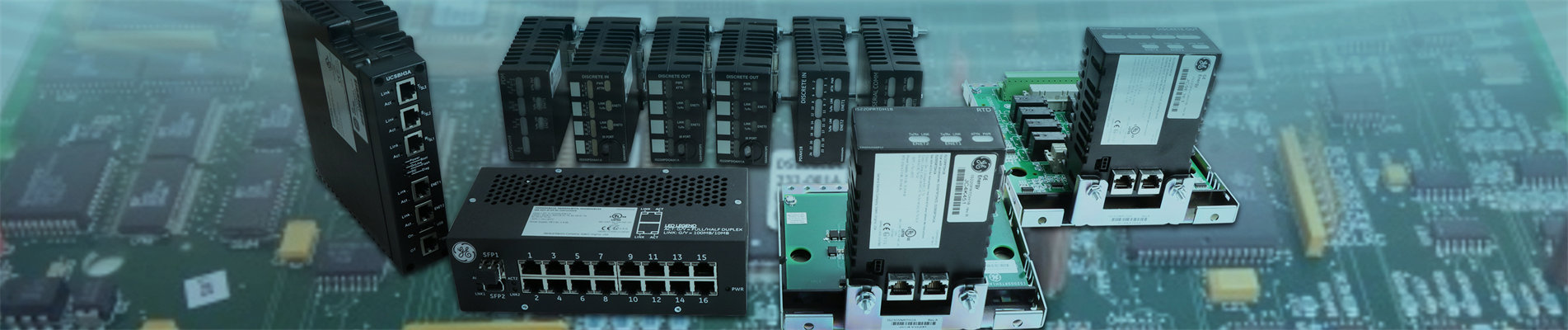

Honeywell EPLCG Overview and Position in TDC 3000
The EPLCG is part of Honeywell’s TDC 3000 Local Control Network architecture. According to the Honeywell EPLCG Planning, Installation, and Service manual, it runs under an unmodified Hiway Gateway software personality and uses hardware similar to the Honeywell Hiway Gateway.
The gateway is housed in a standard TDC 3000 dual-node module connected to the LCN. In the EPLCG architecture, the conventional Data Hiway Interface board and its I/O board are replaced by an Enhanced Programmable Logic Controller Interface board and an EPLCI I/O board. Some configurations can use the earlier PLCI, PLCI I/O paddleboards and relay panel, but EPLCI-resident functions are then unavailable.
Its position in the system is between the TDC 3000 supervisory network and external PLC-controlled equipment. The EPLCG is therefore a communication gateway rather than an analog or discrete field I/O module. It transfers PLC information so that the TDC 3000 system can monitor and process configured data through its established operator and control environment.
Honeywell documented six EPLCG configurations:
MP-NEPLC3 and MP-NEPLC5 nonredundant gateways
MP-REPLC3, MP-REPLC4, MP-REPLC7 and MP-REPLC8 redundant gateways
These model numbers identify complete gateway arrangements, not simply individual circuit boards. Selection must consider protocol, redundancy, I/O hardware, relay-panel use and CE or non-CE construction.
Technical Architecture and Key Specifications
An EPLCG assembly includes LCN interface hardware, an EPLCI gateway circuit board, the appropriate I/O adapter, module power components and configuration-specific cables. Redundant installations use separate primary and secondary gateways.
Honeywell warns that the two members of a redundant pair must not be installed in the same dual-node module. A backplane failure could otherwise affect both gateways and defeat the purpose of redundancy. The modules are normally mounted near each other because the interlink and relay-panel cables have defined length restrictions.
|
Parameter |
Confirmed specification |
|
Control platform |
Honeywell TDC 3000/TDC 3000X LCN |
|
Manual software level |
TDC 3000X Release 430 |
|
Installation format |
Standard dual-node module |
|
Approximate dimensions |
17 × 48 × 61 cm |
|
Approximate weight |
21.5 kg per dual-node module |
|
AC supply options |
120, 220 or 240 Vac, +10%/−15% |
|
Supply frequency |
47–63 Hz |
|
Operating temperature |
0–50°C |
|
Recommended normal environment |
25°C at 40–50% relative humidity |
|
Operating vibration limit |
1 g |
|
PLC communication ports |
Two serial ports |
|
Supported port protocols |
Modbus RTU or Allen-Bradley, depending on configuration |
|
Selectable port speeds |
50 to 19.2 kbaud |
|
Factory port setting |
9,600 baud with odd parity |
|
Maximum direct cable distance |
15 cable-metres or 50 cable-feet |
|
Supported PLC total |
Up to 16 PLCs per EPLCG configuration |
|
Redundant interboard connection |
Asynchronous EIA-422 at 38.4 kbaud |
|
EPLCI interlink cable |
Fixed length of 3 metres |
The EPLCG is applicable when an existing TDC 3000 system must supervise equipment controlled by separate PLCs. Its practical value is the ability to retain local PLC control while bringing selected operating information into the plant’s established DCS environment.
For example, a process facility may have a PLC-controlled packaged machine, auxiliary system or independent equipment skid that must be monitored from the central control room. The EPLCG provides the communication layer between that PLC subsystem and the TDC 3000 LCN.
In a refinery or chemical facility, this architecture can support communication with independently controlled equipment without transferring all local logic into the DCS. In a power facility, the same principle can be applied to a PLC-based auxiliary subsystem whose status must be visible to TDC 3000 operators.
These are engineering examples based on the documented gateway function. The referenced Honeywell manual does not identify specific customers, named plants or project case studies.
Before ordering Honeywell control system components, record the complete EPLCG model and inspect the installed hardware. Useful identification details include:
EPLCI or PLCI board part number and revision
I/O paddleboard part number
CE or non-CE module construction
Relay-panel presence and pinning
Port protocol, baud rate and parity
Primary or secondary gateway role
TDC 3000 software release
LCN interface-board part numbers
Cable numbers, connectors and lengths
A PLCG and an EPLCG must not be combined as the primary and secondary members of a redundant gateway pair. Redundant EPLCI boards must also have matching pin settings. Similar faceplates or connectors do not establish compatibility.
For communication problems, check the serial cable, modem or communication interface, baud rate, parity, protocol selection and PLC addressing before replacing a board. Review the gateway’s communication statistics and error indications where available.
51400997-200 – EPLCI Gateway Circuit Board: Honeywell lists this 14 × 14-inch gateway PWA for all EPLCG models. Its broad EPLCG application does not remove the need to verify board revision, firmware requirements and pin settings.
51402615-200 – K2LCN Circuit Board with 2 MW: This LCN circuit board is explicitly listed as the replacement for 51401551-201. This documented relationship applies to the stated board numbers and should not be extended to other LCN boards.
51196074-100 – EPLCI-to-EPLCI Interlink Cable: A fixed three-metre interlink cable used in redundant EPLCG systems without a relay card.
51304812-100 – Non-CE EPLCI I/O Adapter: A paddleboard with plastic extractor clips, documented only for non-CE modules without a relay card.
51304812-200 – CE EPLCI I/O Adapter: The metal-faceplate version specified for CE-marked modules. It should not be confused with the non-CE adapter based only on the shared base number.
51304421-200 – PLCG Relay Panel: Used in applicable redundant configurations and documented as replacing 51304421-100. It is not used in nonredundant EPLCGs or redundant EPLCG systems with redundant Allen-Bradley communications.
The EPLCG remains relevant wherever a TDC 3000 installation depends on communication with PLC-controlled equipment. Careful verification of the gateway configuration and associated automation spare parts can reduce compatibility errors and support maintenance of legacy process control components.
Moore Automation can assist with model identification, availability checks, lead-time enquiries and quotations. Customers may also request photographs or video of the actual item before shipment to compare labels, connectors, faceplates and physical condition.

IPv6 รองรับเครือข่าย
| แผนผังเว็บไซต์
| XML
| ข้อกำหนดและเงื่อนไข
| นโยบายความเป็นส่วนตัว
MAIL US
CAIL US